


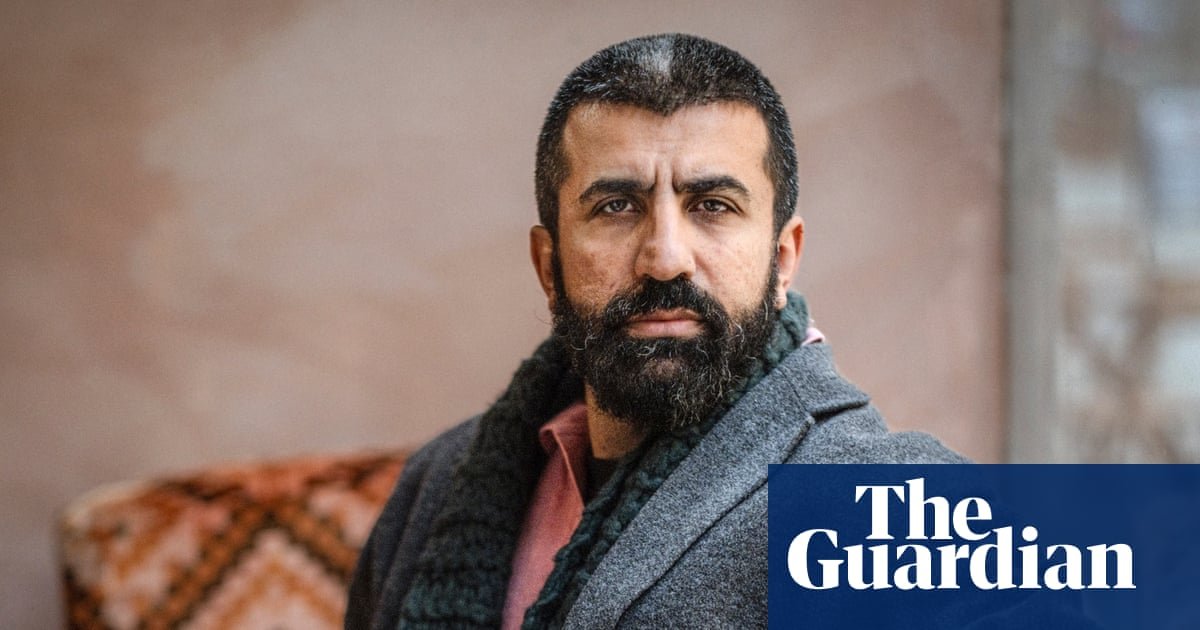
After a transformative experience in Iran, Zirrar Ali quit his corporate 9-5 job and began travel writing. Seven years later, he and his elderly father were participating in the sacred five-day Muslim pilgrimage, the hajj, when temperatures soared to more than 51C. The climate crisis has already made peak temperatures in Mecca about 2C hotter than in preindustrial times.
By the age of 40, I had travelled so much that I was exhausted. I needed to be done with this experimentation of places and see the ultimate place, Mecca. There was always a pull to go back to the east. In my tradition, the only travel you were ever supposed to do is the great pilgrimage to Mecca. Abraham built the very first house of God in Mecca. God said to him: “Proclaim to the people the hajj; they will come to you on foot and on every lean camel; they will come from every distant pass.” All souls go to that location; it’s a homecoming. Once I said I was going, my dad said: “OK, I’m going as well.”
A week before the hajj started, I flew into Medina and met my father. Medina becomes a warm-up. You learn the rituals and why you’re doing it. It’s regulating your nervous system to a different routine. It’s very peaceful. To protect you from the sun, they made special umbrellas. It has this coating for the sun. When it gets hot around midday, they release cooling vapour. Now you have shade and there’s water hitting you. There’s a deceptive feeling that it’s not hot.
At the beginning of hajj you go to the Grand Mosque in Mecca and do seven rounds around the Kaaba. It’s hundreds of thousands of people dressed in white, walking like a river and humming supplications to God. I remember covering myself with sunscreen thinking: “I’m going to be hot.” You’re in the open space, no roof, no air conditioning. But the weather was surprisingly cool. Maybe this is one of the blessings of God? I remember thinking: “How am I going to carry an umbrella and push my dad on a wheelchair at the same time?” I threw my umbrella away.
The second day everything shifted. The Day of Arafat. The most sacred day. You start from the outskirts of Mecca. Within two hours of the sun coming up, you start feeling the heat. As it got hotter, almost everybody within my group decided to stay indoors for some of the rituals. There’s a huge canopy set up, and they have air conditioning inside. They were sensible. I was stubborn. I didn’t want to spend this blessed day indoors because of the heat.
If your group hasn’t organised transportation, you have to walk between three places, wearing sandals. They’re quite close to each other, but because of traffic and lack of transportation, half an hour away becomes four hours. People don’t turn off the cars and buses because the air conditioning is keeping them cool. If you walk between buses, you get hit with the heat of diesel. Fumes permeate your nostrils, your skin.
When prayer comes between midday and 4pm, it’s peak heat. You can’t rehydrate or get shade. The heat quickly becomes dangerous. Volunteers give away cold water. I would get a bottle of water and down it in about five seconds, feeling like I’m going to pass out. I couldn’t believe how many water bottles were on the ground. The heat is so incredible, no one has the energy to talk. All you hear is stomping and plastic bottles crunching.
There’s a fight for any shade. There are people sleeping in the compartments where you put the luggage in buses. People are trying to find one little angle where the truck or the car will give you shade. That’s the difference between getting heatstroke and not. Elderly people are passing out under a tree or near the entrance of the mosques.
Normally when an elderly person trips on the street, everyone rushes: “Are you OK? Let me help you up.” Here, that instinct had gone. I saw people who collapsed in the arms of people that they love, realising: “Either I’m going to recover from this heatstroke or I won’t.” You see this resignation in the eyes. That’s the first time I’ve seen people give up on life.
In the places I passed, I remember seeing ambulances but no one coming to help. It just didn’t make any sense. What is their job other than to save people? A lot of people save up their entire life for the hajj and assume they’ll be looked after. But it turns out, here we are in the hottest place, and there’s not enough water, shade and doctors.
I didn’t want to lose my father. As an elderly man, to walk even a mile in the heat was dangerous. I realised I’m responsible for my father; I’ve become the father and he’s become the son. Because of the heat, I would leave him back at the hotel. He performed the essential rights himself. For others, I did them for him, as his son.
I remember feeling drowsy: “I just want to sit down for five minutes.” I remember thinking: “No, don’t sit down.” I’ve read about heatstroke. You don’t wake up from this. If I didn’t find shade, if I didn’t find water, I could easily pass out and I don’t think help would arrive. I’m surrounded by millions of people, but I could still die because of the heat. That’s such a bizarre feeling. My own weakness and vulnerability hit me. I remember my survival kicking in: “I need to just keep going, keep going.”
As the evening approaches, it starts to get a little bit cooler. About 4pm, I climbed Mount Arafat, near where the Prophet Muhammad gave his last sermon, to pray and ask God for forgiveness. Some people chose not to climb because it was hot, but I chose to. On the mountain, I look around and people are smiling, talking, praying. Hundreds of thousands of hands raised into the sky. Here, the heat is completely ignored. People have made peace with themselves, God, and death. This is the first time where I felt at peace. I’ve survived the hottest part of the day.
You spend that night sleeping outside in the open, on pebbles and dirt with thousands of people. We went from being very individualistic people into one cohesive body. At the start of the hajj, I’d seen people jumping queues to get on to buses and fighting. By the end of the five days, you realise: “No one else is going to help us. We have to help each other.” This is no longer: “I’m from country X, therefore I’m more eligible for this than you are.” You give advice, you give your umbrella, you give water. I realised this is what I came for.
Hajj is meant to expose certain pains in your life and you may feel vulnerable. You come back with relief. I watched some of the reporting about people losing their family. I remember feeling quite sad because I didn’t want the hajj to be a hardship in that sense. Historically, there have been many tragedies in hajj: overcrowding, cranes falling, rainstorms. But I’d never heard of so many casualties. These poor people are dying. Where I was, there wasn’t enough water, shade or medical help. Many of these deaths felt avoidable.
I don’t think climate change is something that most people pray about. But, opening your eyes to it, that’s important. In Islam [https://www.theguardian.com/world/islam], the world around us is full of God’s signs. Beautiful things point back to him. But we are losing his blessings. Even people who believe in climate change, you can sense there’s a nihilism: “I’m trying, but nothing’s really going to change. What’s really the point of this?” There’s very much a hands-off approach with everything. You say: “This is what God wanted.” But trusting God doesn’t mean doing nothing. The prophet said: “Tie your camel, then trust in God.”
This is climate breakdown was put together in collaboration with the Climate Disaster Project at University of Victoria, Canada. Read more. [https://www.theguardian.com/p/xvpzd9]
Fuente: The Guardian